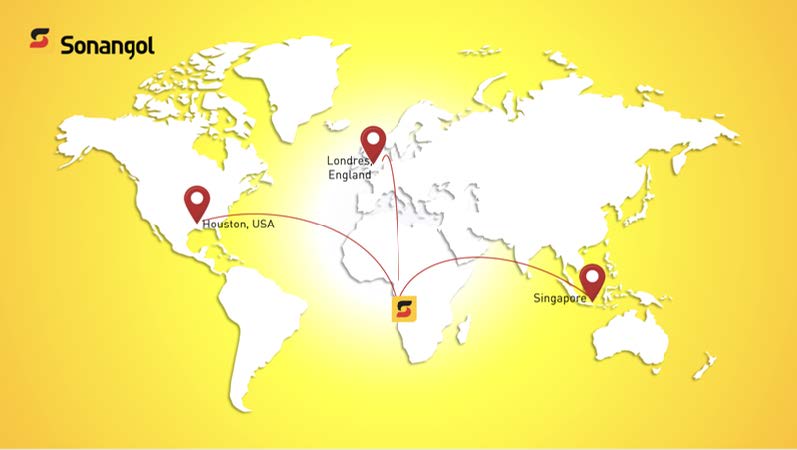
SONANGOL OFFICES AND MARKET PRESENCE

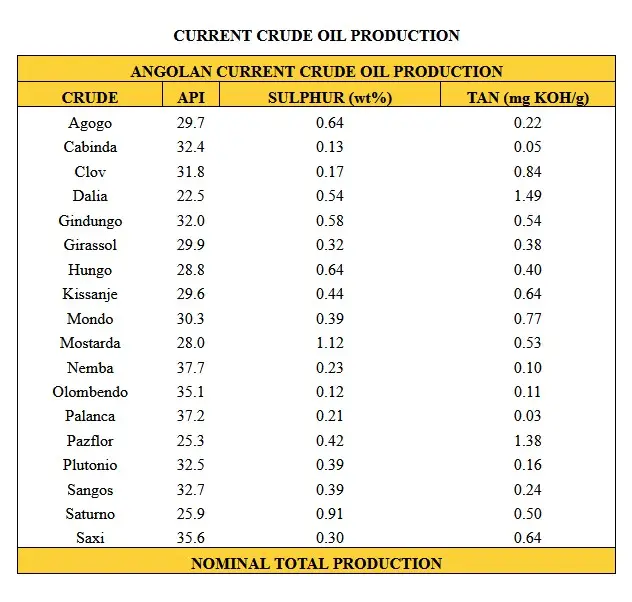
As the largest physical marketer of Angolan crude oil, Sonangol markets the total oil assets of ANPG and Sonangol, representing an equity volume of around 40% of the country’s total production.

  • Oil operations in Angola
  • Shallow Waters: Blocks 0, 2, 3 & 4
  • Deep Waters: Blocks 14, 15, 17 & 18
  • Ultra –Deep Waters: Blocks 31, 32, 33
  • Pre-Salt: Block 20 & 21
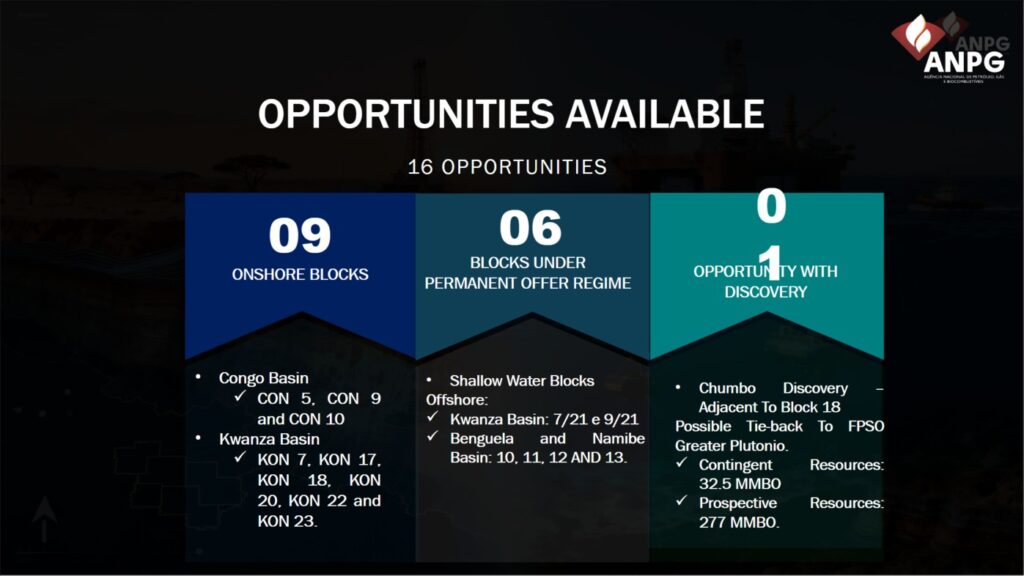
  • Onshore: Future developments: Lower Congo Basin, Kwanza Basin, Namibe Basin & Benguela Basin

Trading and Shipping

Distribution and Commercialisation

Refining and Petrochemicals

Gas and Renewables

TOBD Oil Terminal

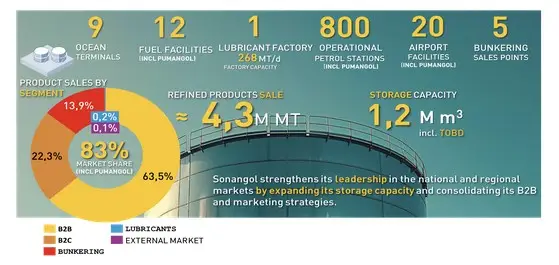
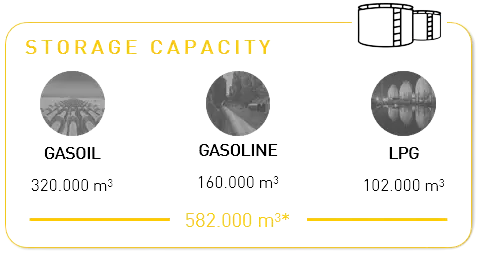
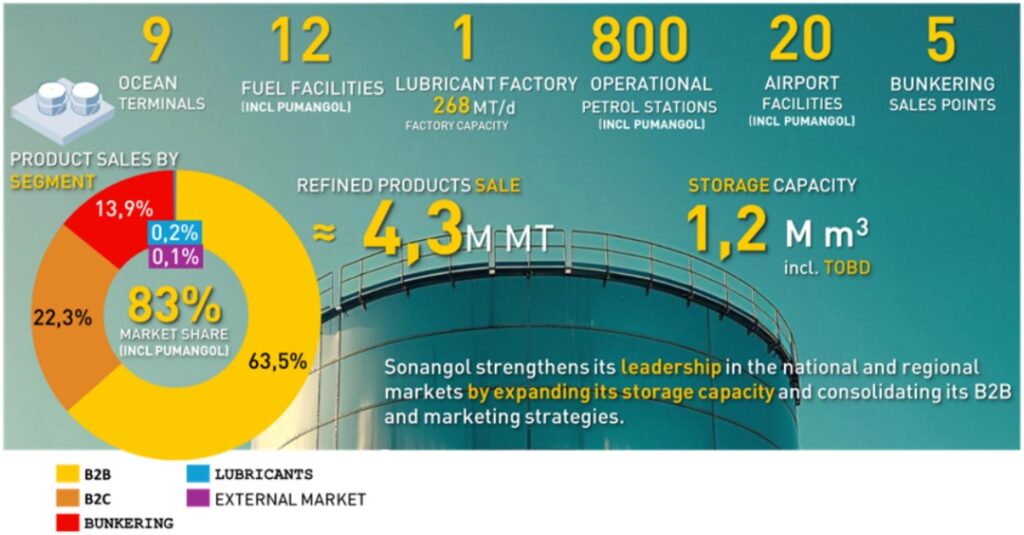
TOBD offers comprehensive services and significant storage capacity (582,000 m³) for gasoil, gasoline, and LPG. The terminal is built according to international standards to ensure efficiency and sustainability, meeting market demands while ensuring investment viability and strong returns.

Increasing Refining Capacity

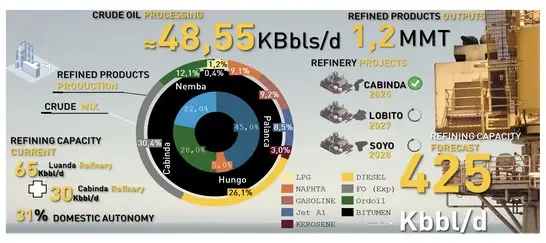
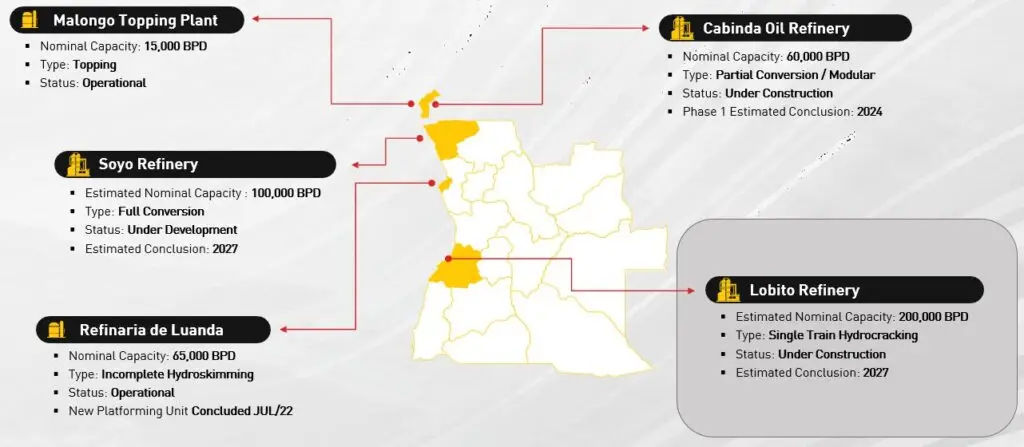
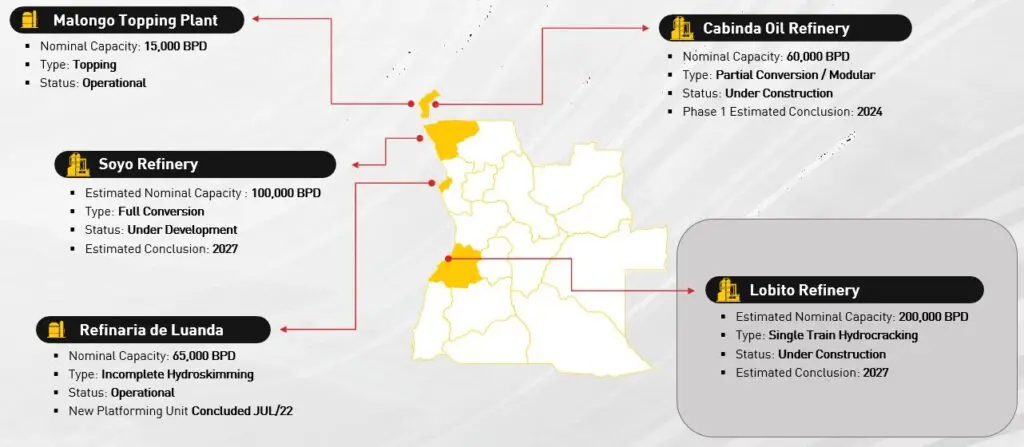
Overview of Angola’s oil refining infrastructure, highlighting the location, capacity, technology, and development status of the country’s key refineries. Mapped across Angola, it showcases both operational facilities, such as the Luanda and Malongo refineries and major projects under construction or development, including Cabinda, Lobito, and Soyo. It illustrates Angola’s strategic push to expand domestic refining capacity, reduce fuel imports, and modernise its downstream oil sector through a mix of topping, conversion, and hydrocracking technologies.

Lobito Refinery​

The Lobito Refinery is projected to process 200 kbpd of low sulfur crude oil using state of the art technology that both increases the viability of the plant and reduces its impact on the environment by implementing CO2 reducing initiatives like the combustion of LPG for heat and electricity generation, instead of using Fuel Oil and Diesel.

Cabinda Refinery​

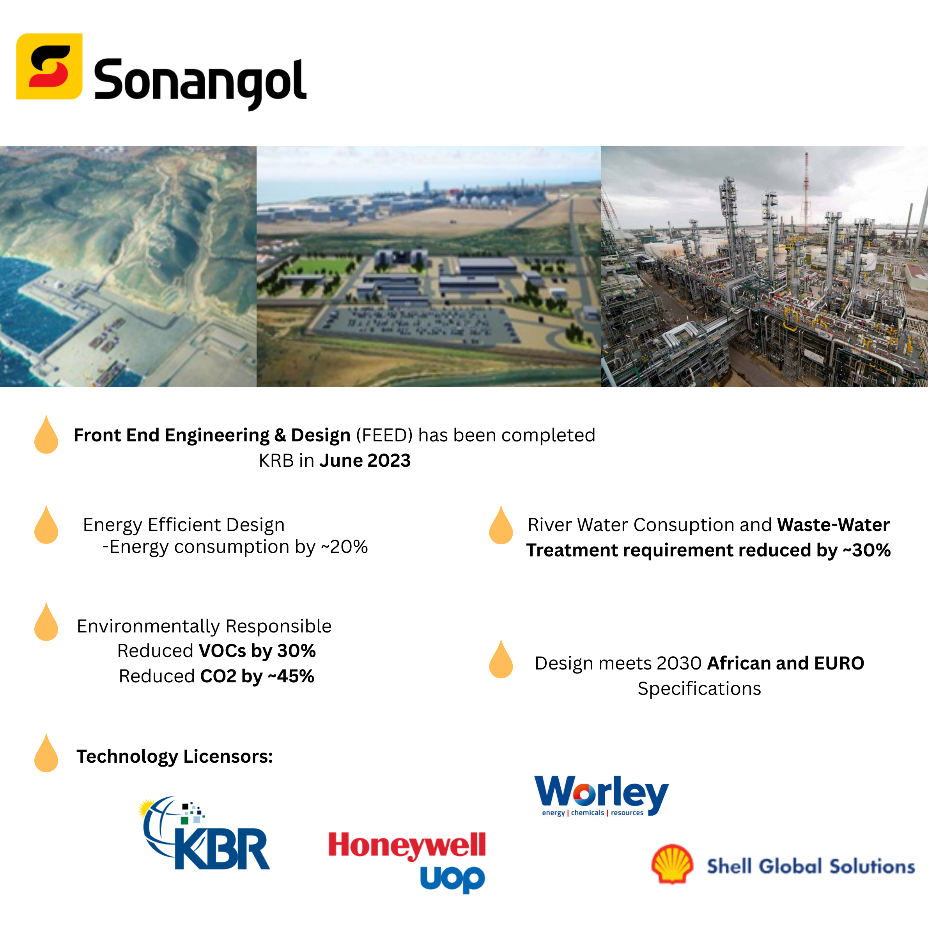
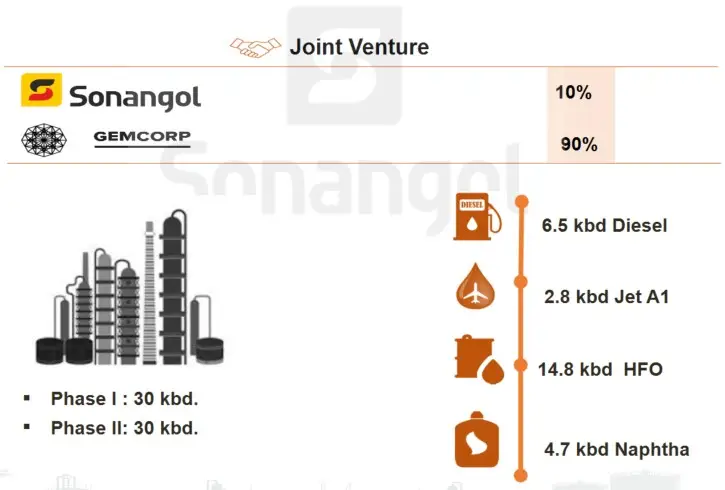
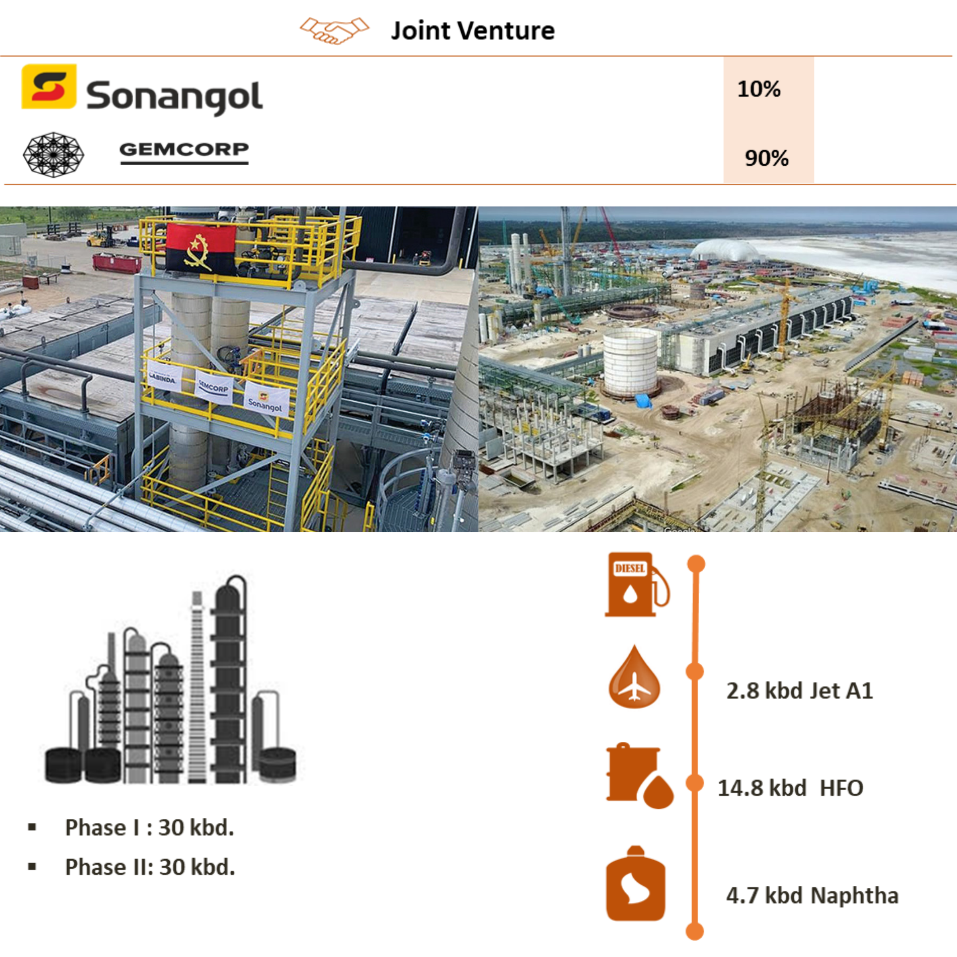
Cabinda Refinery is located in Malembo, about 30 km north of the city of Cabinda, with the aim of transforming local crude oil into refined products and contribute to reduce dependence on imports. It’s a project with a 60 kbd processing capacity, 30 kbd in each phase.

Caraculo Photovoltaic Solar Power Plant

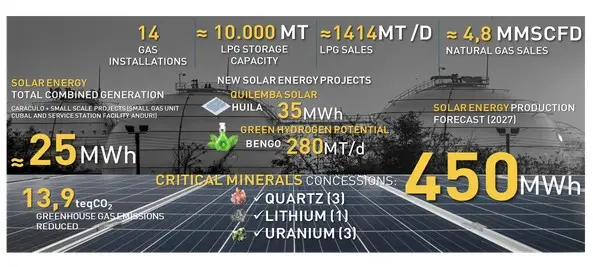
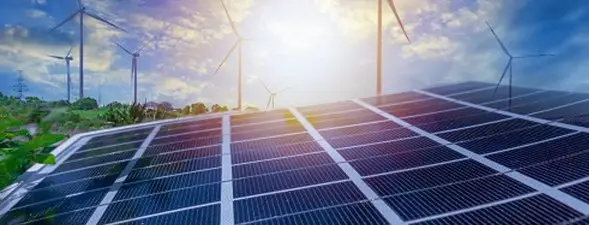
Operational since 2023, built on a 33-hectare area, located 60 kilometers from Namibe province. For the first phase, a total of 25 MW was installed, equivalent to 46,000 panels. The Caraculo Project, resulting from a consortium between Angola’s Sonangol and Italy’s ENI, which led to the creation of Solenova, has an installed capacity of 50 MW.

Solar Panels at Fuel Supply Stations

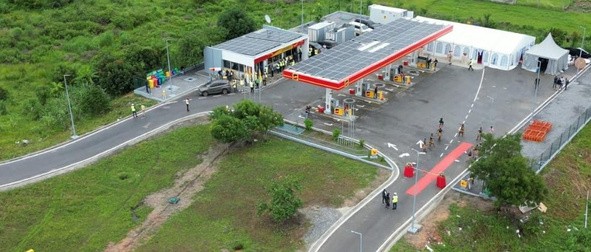
We have begun the process of installing solar panels at Fuel Supply Stations and Gas Facilities, with plans to expand to more assets currently off the public grid.

Hydrogen Project in Barra do Dande

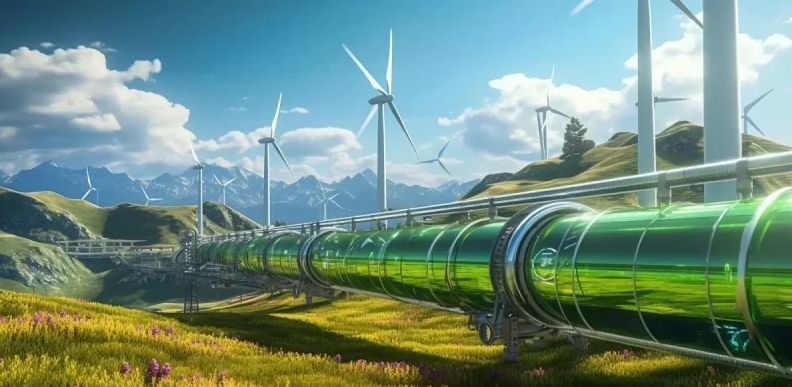
Located in the municipality of Barra do Dande, the green hydrogen project will produce up to 1,200 tons of ammonia. Include the installation of 600 MW of renewable energy capacity generated from hydroelectric sources, as well as a 400 kV substation and proper water treatment. Developed in partnership with CWP, Conjuncta, and Gauff, will be the first of its kind in Sub-Saharan Africa.

We are continuing the development of the Quilemba Photovoltaic Plant in Huila, which will have an initial capacity of 35 MW, in partnership with TotalEnergies.

Quilemba Photovoltaic Plant in Huila

We are continuing the development of the Quilemba Photovoltaic Plant in Huila, which will have an initial capacity of 35 MW, in partnership with TotalEnergies.

Sonangol Blue Carbon Project

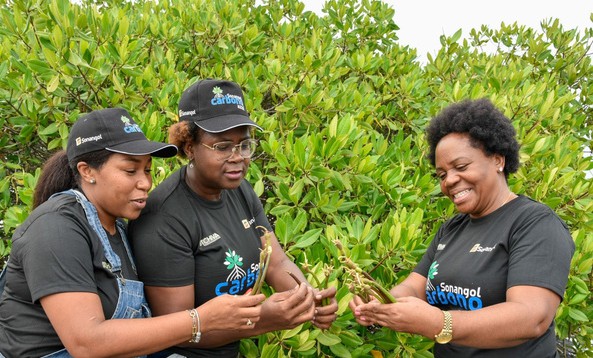
Involves active participation from Sonangol employees, local communities, and civil society.

To date, the project has engaged 2,531 volunteers, planted 223,746 mangroves, and restored 220 hectares of coastal areas. By focusing on mangrove restoration, the project not only contributes to carbon sequestration but also supports biodiversity and strengthens coastal resilience. Sonangol’s commitment to this initiative highlights its dedication to environmental stewardship and sustainable development, positioning the company as a leader in ecological preservation and community engagement.
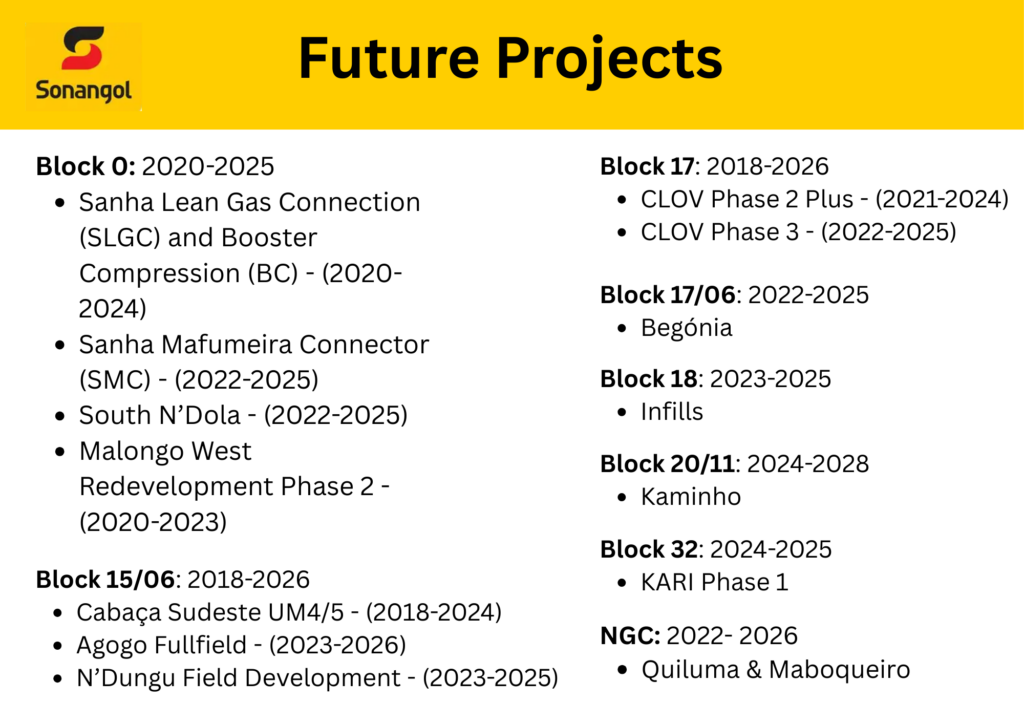
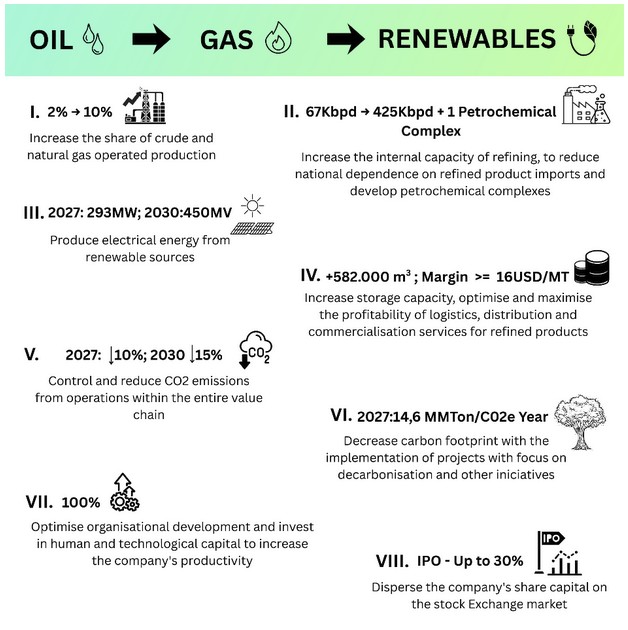
In the context of the energy transition, Sonangol has adopted a portfolio diversification strategy for the period 2023-2030, with a focus on hydrocarbons as the basis for financing the transition to cleaner energies.

As the largest physical marketer of Angolan crude oil, Sonangol markets the total oil assets of ANPG and Sonangol, representing an equity volume of around 40% of the country’s total production.

  • Oil operations in Angola
  • Shallow Waters: Blocks 0, 2, 3 & 4
  • Deep Waters: Blocks 14, 15, 17 & 18
  • Ultra –Deep Waters: Blocks 31, 32, 33
  • Pre-Salt: Block 20 & 21
  • Onshore: Future developments: Lower Congo Basin, Kwanza Basin, Namibe Basin & Benguela Basin

Trading and Shipping

Distribution and Commercialisation

Refining and Petrochemicals

Gas and Renewables

TOBD Oil Terminal

TOBD offers comprehensive services and significant storage capacity (582,000 m³) for gasoil, gasoline, and LPG. The terminal is built according to international standards to ensure efficiency and sustainability, meeting market demands while ensuring investment viability and strong returns.

Increasing Refining Capacity

Overview of Angola’s oil refining infrastructure, highlighting the location, capacity, technology, and development status of the country’s key refineries.Mapped across Angola, it showcases both operational facilities,such as the Luanda and Malongo refineries and major projects under construction or development, including Cabinda, Lobito, and Soyo.It illustrates Angola’s strategic push to expand domestic refining capacity, reduce fuel imports,and modernise its downstream oil sector through a mix of topping, conversion, and hydrocracking technologies.

Lobito Refinery​

The Lobito Refinery is projected to process 200 kbpd of low sulfur crude oil using state of the art technology that both increases the viability of the plant and reduces its impact on the environment by implementing CO2 reducing initiatives like the combustion of LPG for heat and electricity generation, instead of using Fuel Oil and Diesel.

Cabinda Refinery​

Cabinda Refinery is located in the Malembo, about 30 km north of the city of Cabinda, with the aim of transforming local crude oil into refined products and, contribute to reduce dependence of imports.It’s a project with a 60 kbd processing capacity, 30 kbd in each phase.

Caraculo Photovoltaic Solar Power Plant

Operational since 2023, built on a 33-hectare area, located 60 kilometers from Namibe province.For the first phase, a total of 25 MW was installed, equivalent to 46,000 panels.The Caraculo Project, resulting from a consortium between Angola’s Sonangol and Italy’s ENI, which led to the creation of Solenova, has an installed capacity of 50 MW.

Solar Panels at Fuel Supply Stations

We have begun the process of installing solar panels at Fuel Supply Stations and Gas Facilities, with plans to expand to more assets currently off the public grid.

Hydrogen Project in Barra do Dande

Located in the municipality of Barra do Dande, the green hydrogen project will produce up to 1,200 tons of ammonia. Include the installation of 600 MW of renewable energy capacity generated from hydroelectric sources, as well as a 400 kV substation and proper water treatment. Developed in partnership with CWP, Conjuncta, and Gauff, will be the first of its kind in Sub-Saharan Africa.

Quilemba Photovoltaic Plant in Huila

We are continuing the development of the Quilemba Photovoltaic Plant in Huila, which will have an initial capacity of 35 MW, in partnership with TotalEnergies.

Sonangol Blue Carbon Project

Involves active participation from Sonangol employees, local communities, and civil society.

To date, the project has engaged 2,531 volunteers, planted 223,746 mangroves, and restored 220 hectares of coastal areas. By focusing on mangrove restoration, the project not only contributes to carbon sequestration but also supports biodiversity and strengthens coastal resilience. Sonangol’s commitment to this initiative highlights its dedication to environmental stewardship and sustainable development, positioning the company as a leader in ecological preservation and community engagement.

In the context of the energy transition, Sonangol has adopted a portfolio diversification strategy for the period 2023-2030, with a focus on hydrocarbons as the basis for financing the transition to cleaner energies.

As the largest physical marketer of Angolan crude oil, Sonangol markets the total oil assets of ANPG and Sonangol, representing an equity volume of around 40% of the country’s total production.

  • Oil operations in Angola
  • Shallow Waters: Blocks 0, 2, 3 & 4
  • Deep Waters: Blocks 14, 15, 17 & 18
  • Ultra –Deep Waters: Blocks 31, 32, 33
  • Pre-Salt: Block 20 & 21
  • Onshore: Future developments: Lower Congo Basin, Kwanza Basin, Namibe Basin & Benguela Basin

Trading and Shipping

Distribution and Commercialisation

Refining and Petrochemicals

Gas and Renewables

TOBD Oil Terminal

TOBD offers comprehensive services and significant storage capacity (582,000 m³) for gasoil, gasoline, and LPG. The terminal is built according to international standards to ensure efficiency and sustainability, meeting market demands while ensuring investment viability and strong returns.

Increasing Refining Capacity

Overview of Angola’s oil refining infrastructure, highlighting the location, capacity, technology, and development status of the country’s key refineries. Mapped across Angola, it showcases both operational facilities, such as the Luanda and Malongo refineries and major projects under construction or development, including Cabinda, Lobito, and Soyo. It illustrates Angola’s strategic push to expand domestic refining capacity, reduce fuel imports, and modernise its downstream oil sector through a mix of topping, conversion, and hydrocracking technologies.

Lobito Refinery​

The Lobito Refinery is projected to process 200 kbpd of low sulfur crude oil using state of the art technology that both increases the viability of the plant and reduces its impact on the environment by implementing CO2 reducing initiatives like the combustion of LPG for heat and electricity generation, instead of using Fuel Oil and Diesel.

Cabinda Refinery​

Cabinda Refinery is located in Malembo, about 30 km north of the city of Cabinda, with the aim of transforming local crude oil into refined products and, contribute to reduce dependence on imports. It’s a project with a 60 kbd processing capacity, 30 kbd in each phase.

Caraculo Photovoltaic Solar Power Plant

Operational since 2023, built on a 33-hectare area, located 60 kilometers from Namibe province.For the first phase, a total of 25 MW was installed, equivalent to 46,000 panels.The Caraculo Project, resulting from a consortium between Angola’s Sonangol and Italy’s ENI, which led to the creation of Solenova, has an installed capacity of 50 MW.

Solar Panels at Fuel Supply Stations

We have begun the process of installing solar panels at Fuel Supply Stations and Gas Facilities, with plans to expand to more assets currently off the public grid.

Hydrogen Project in Barra do Dande

Located in the municipality of Barra do Dande, the green hydrogen project will produce up to 1,200 tons of ammonia. Include the installation of 600 MW of renewable energy capacity generated from hydroelectric sources, as well as a 400 kV substation and proper water treatment. Developed in partnership with CWP, Conjuncta, and Gauff, will be the first of its kind in Sub-Saharan Africa.

Quilemba Photovoltaic Plant in Huila

We are continuing the development of the Quilemba Photovoltaic Plant in Huila, which will have an initial capacity of 35 MW, in partnership with TotalEnergies.

Sonangol Blue Carbon Project

Involves active participation from Sonangol employees, local communities, and civil society.

To date, the project has engaged 2,531 volunteers, planted 223,746 mangroves, and restored 220 hectares of coastal areas. By focusing on mangrove restoration, the project not only contributes to carbon sequestration but also supports biodiversity and strengthens coastal resilience. Sonangol’s commitment to this initiative highlights its dedication to environmental stewardship and sustainable development, positioning the company as a leader in ecological preservation and community engagement.
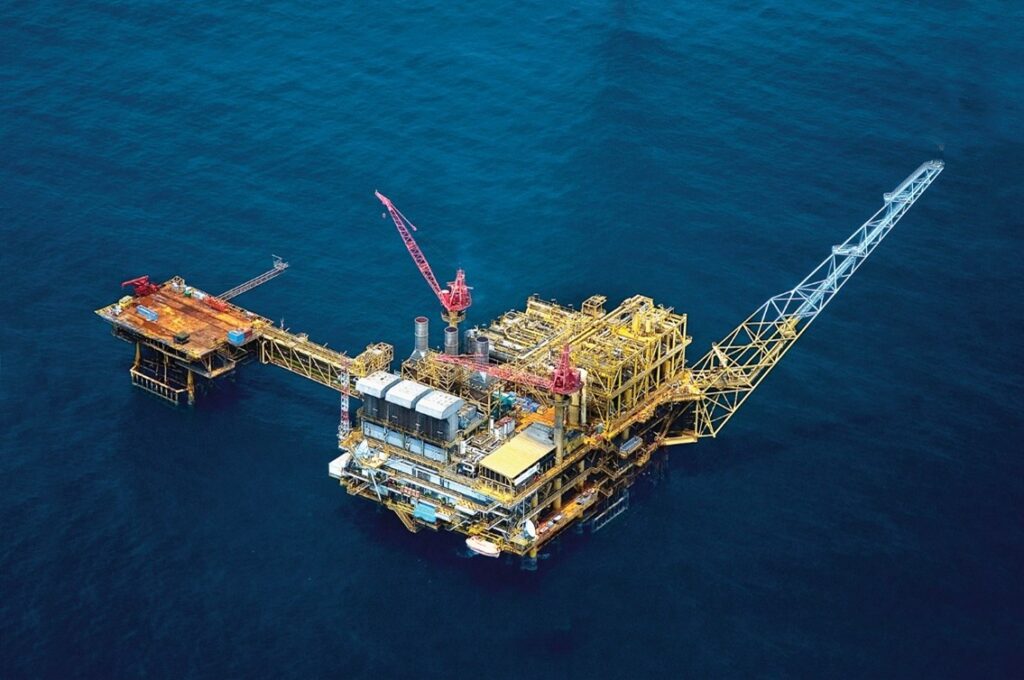
In the context of the energy transition, Sonangol has adopted a portfolio diversification strategy for the period 2023-2030, with a focus on hydrocarbons as the basis for financing the transition to cleaner energies.

Operators

Partners